
Old Boilers Explained
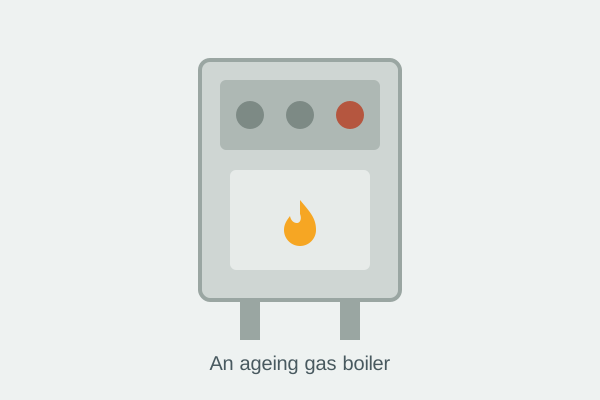
"Old boiler" is a broad term, but for grant funding it has a fairly specific meaning: a heating appliance that is inefficient by modern standards, usually non-condensing and typically installed before 2005. Below we explain each of the main old boiler types, how to recognise yours, and the faults they commonly develop. If you have one of these, you are likely to be eligible for a free boiler grant.
The main types of old boiler
Most older British homes have one of six boiler types. Each behaves a little differently, but they share the same drawback: they waste a large share of the fuel they burn. Select a type to read a full guide.
Open-flue (conventional) boilers
Heat-only boilers that work with a hot-water cylinder in the airing cupboard and feed-and-expansion tanks in the loft. They draw combustion air from the room and vent through an open flue.
Back boilers
Concealed units sitting behind a gas fire in the living-room chimney breast. Extremely common in homes built or modernised between the 1960s and 1990s.
Floor-standing boilers
Large, heavy boilers that stand on the floor rather than hanging on a wall, often found in kitchens, utility rooms or garages of older properties.
Non-condensing wall-hung boilers
Wall-mounted boilers that predate the 2005 condensing requirement and lose much of their heat straight up the flue.
Older combi boilers
First-generation combination boilers from the late 1990s and early 2000s — convenient in their day, but now inefficient and prone to faults.
Oil boilers
Off-grid homes heated by oil, where an ageing boiler burns far more fuel than a modern condensing oil model.
What these boilers have in common
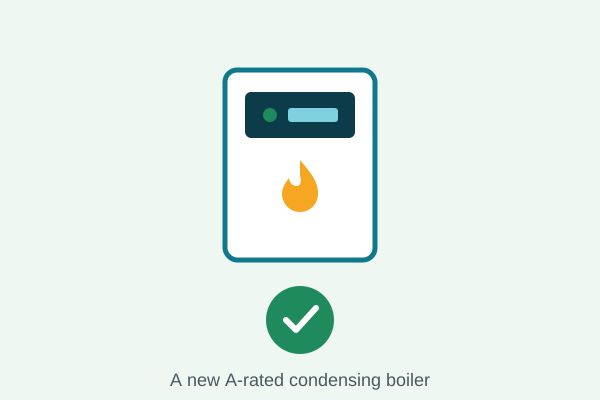
The defining feature of an old boiler is that it is non-condensing. A condensing boiler captures the heat from the water vapour in its exhaust gases and reuses it; a non-condensing boiler simply lets that heat escape. That single difference is why an old unit might run at 65–75% efficiency while a new one exceeds 90%. In practice, for every pound you spend heating the home, an old boiler can waste 25–35 pence.
Age brings other issues too: corroded heat exchangers, worn pumps, sludge-filled radiators, scarce spare parts and dated, imprecise controls. You can read more in our guide to the problems with old boilers. The good news is that if your home has any of the boilers above, replacing it is exactly what grant funding is designed to support.
It is worth stressing that a boiler does not have to be broken to count as an old boiler. Many of the units we replace are still heating homes every day — they simply do it inefficiently, burning far more fuel than a modern appliance would to achieve the same warmth. That hidden waste is the real cost of an old boiler, and it is the reason grant schemes focus on efficiency rather than on whether the boiler has failed. If you are not yet sure which category your boiler falls into, our guide on how to tell if you have an old boiler walks through the simple checks anyone can do, from finding the data plate to spotting a hot-water cylinder or the absence of a condensate pipe. Once you know what you have, checking whether it qualifies takes only a couple of minutes.