
Non-Condensing Wall-Hung Boilers
Not every wall-mounted boiler is modern. Non-condensing wall-hung boilers look broadly similar to today's units — they hang on the wall and are roughly the same size — but they were made before condensing technology became compulsory for most installations in 2005. That single difference matters enormously: a non-condensing boiler lets the heat in its exhaust gases escape up the flue, while a condensing boiler captures and reuses it. If your wall-hung boiler dates from the late 1990s or early 2000s, there is a good chance it is non-condensing and inefficient.
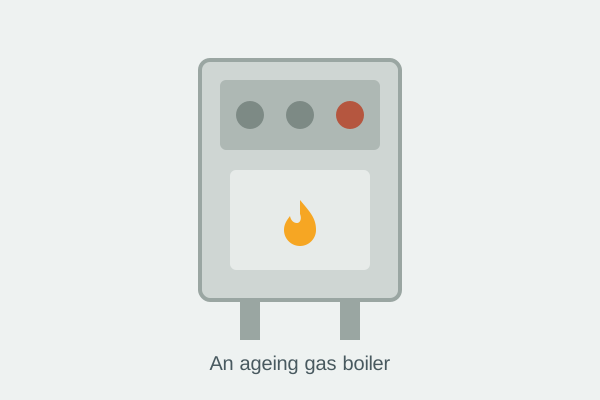
How to recognise a non-condensing wall-hung boilers
Use these tell-tale signs to work out whether this is the boiler in your home:
- There is no white plastic condensate pipe running from the boiler to an outside drain.
- The flue outlet does not produce the visible plume of steam typical of condensing boilers.
- The boiler's data plate shows a manufacture date before 2005.
- Efficiency ratings, if shown, are well below the 90%+ of modern boilers.
- It may feel hot to the touch around the casing, indicating wasted heat.
Still not sure? Our guide on how to tell if you have an old boiler covers the universal checks, and a free survey will confirm your boiler type for certain.
Common problems with non-condensing wall-hung boilers
The defining problem is heat loss: a non-condensing wall-hung boiler typically runs at 65–78% efficiency, so a quarter or more of your gas is wasted. After 20-odd years, components such as the pump, diverter valve and heat exchanger are also reaching the end of their reliable life, and breakdowns become more frequent and more expensive. Spare parts for early models can be hard to find. While these boilers are usually room-sealed and safer than open-flue designs, age still brings reliability and efficiency penalties that show up on every bill.
For a fuller picture across all boiler types, see the problems with old boilers.
The 2005 turning point
The dividing line for wall-hung boilers is 2005, when building regulations across the UK made condensing boilers effectively mandatory for most replacements. Boilers fitted before that date were generally non-condensing, which is why age alone is such a useful guide. If your wall-hung boiler was installed in 2004 or earlier and has no condensate pipe draining outside, it almost certainly belongs to the older, less efficient generation. The visual similarity to modern boilers can be misleading, so checking the data plate for a manufacture date and looking for that tell-tale condensate pipe are the quickest ways to be sure before arranging a survey.
Why replace it — and could it be free?
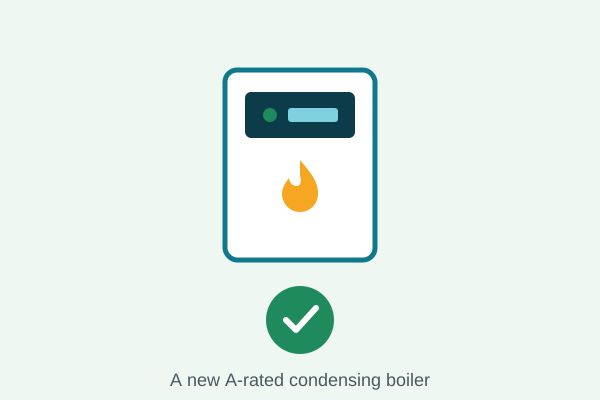
Because a non-condensing wall-hung boiler is already in a sensible position, replacing it with a modern condensing boiler is often a clean, straightforward job. The new unit fits in a similar spot, adds a condensate pipe, and immediately improves efficiency to over 90%. You also gain modern safety and control features and a fresh warranty. For households relying on an ageing non-condensing wall boiler, this is a quick win that grant funding is designed to support.
If you have this boiler and your household meets the income or benefits criteria, you may qualify for a fully funded replacement. Check your eligibility or call 0800 246 8135.